

Goal Types
Every goal is one of four types. The type decides how progress is measured and how you log it, so it is worth a moment's thought when you create a goal. You can change it later if you pick wrong.
Quantifiable
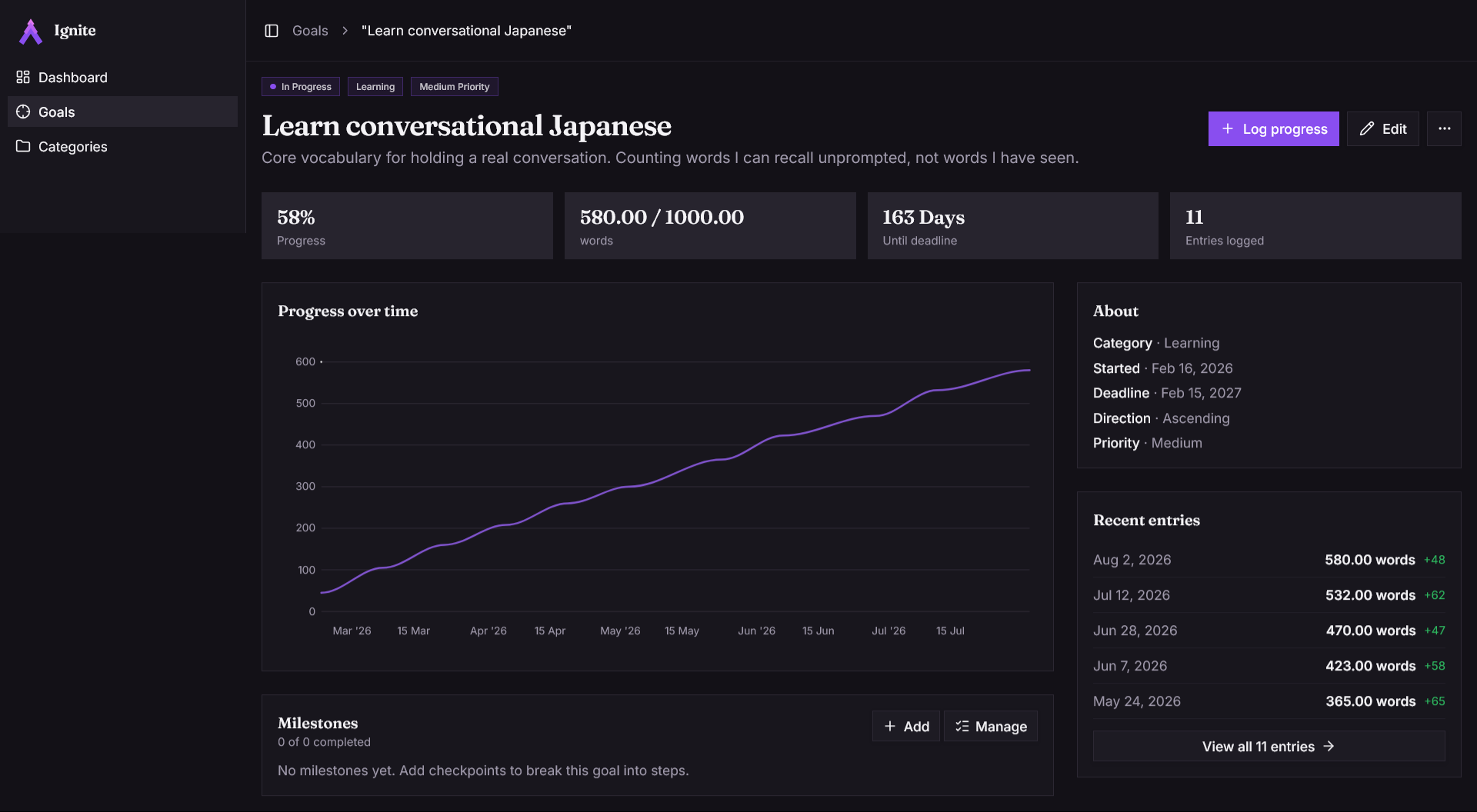
Use it when progress is a number moving toward a target. Read 50 books. Save 3,000 euros. Run 500 kilometres.
You set a target and a unit, and each time you make progress you log an amount. Ignite adds it to your running total and shows the percentage.
Two things are worth knowing:
Progress counts from where you started, not from zero. If you create a savings goal already holding 500 euros, that 500 is your starting point and the bar reflects what you have added since. This is usually what you want, and it is not adjustable after creation.
Goals can go down as well as up. A goal can be descending, where progress means the number falling toward the target: paying a debt from 2,000 down to 0, or cutting a race time. Ignite fills the bar as the number moves in the direction you chose.
Quantifiable goals complete themselves the moment you reach the target. You can overshoot, and the percentage will show it: reading 60 books against a target of 50 shows 120%.
Recurring
Use it when the point is doing something regularly, not reaching a total. Meditate daily. Publish weekly. Review finances monthly.
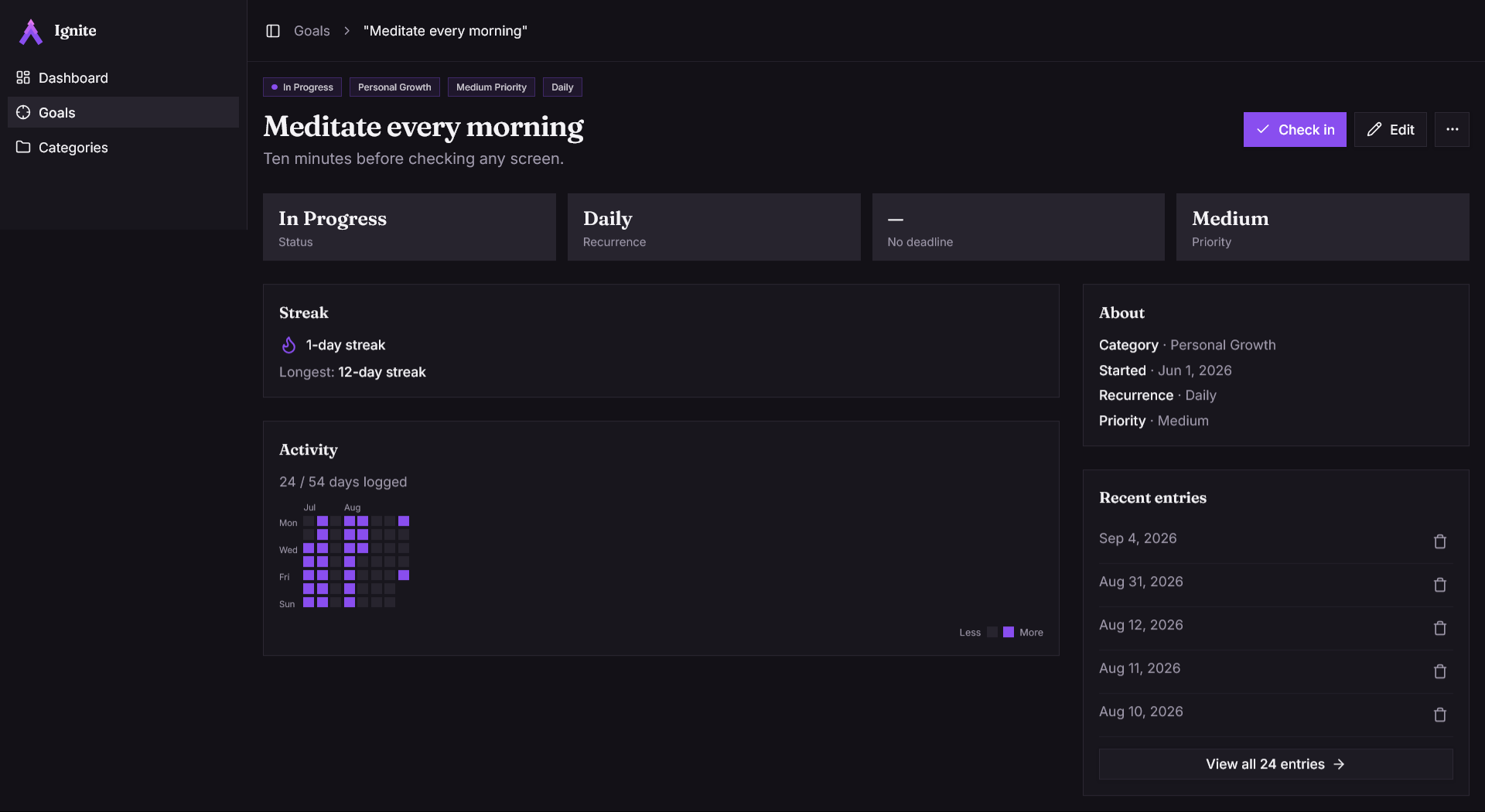
You pick a cadence of daily, weekly, monthly or annually, and each time you do the thing you record a check-in for that date. There is no target and no percentage. What you get instead is a streak, which counts how many consecutive periods you have shown up for.
One detail worth trusting: missing today does not break a daily streak. The current period is still open, so it does not count against you until it closes. A streak breaks only once you have missed two periods in a row. Ignite is deliberately not trying to punish you for logging in the morning before you have meditated.
Streaks are counted in your own timezone, so a late-night check-in belongs to the day you experienced, not to UTC.
Recurring goals can also be inverted, where a check-in records a lapse rather than a success and the streak counts the time since the last one. That fits goals like staying off something, where the number you want to grow is days clean.
Multi-step
Use it when the goal is a sequence of checkpoints rather than a number. Launch a product. Write a dissertation. Plan a wedding.
You break the goal into milestones and tick them off as you finish them. Progress is how many are done. This is the right type whenever "how far along am I?" is better answered by a list than by a percentage.
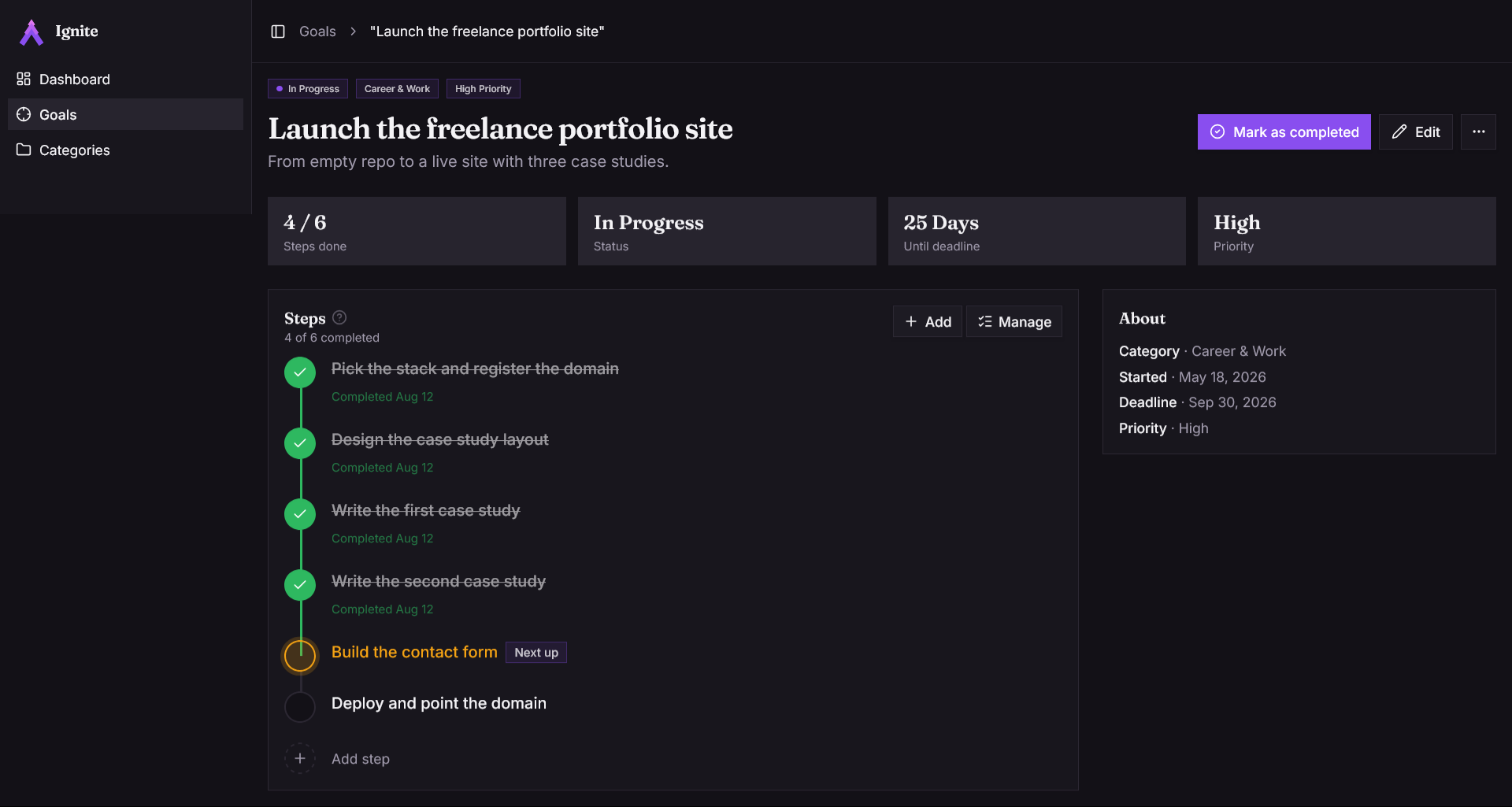
Milestones can be attached to any goal type, but for multi-step goals they are the whole structure.
Simple
Use it when the goal is one thing that is either done or not. Get a driving licence. File the tax return.
No target, no cadence, no milestones. You mark it complete when it is complete. It sounds trivial, and it is the right choice more often than people expect: forcing a binary goal into a numeric one produces a progress bar that means nothing.
Choosing quickly
| If you would describe the goal as... | Use |
|---|---|
| "X by the numbers" | Quantifiable |
| "every day / week / month" | Recurring |
| "a series of stages" | Multi-step |
| "a thing I need to get done" | Simple |
When two fit, prefer the one that makes logging easiest. The type you will actually keep up with beats the one that models the goal most precisely.